Affiliate disclosure: This post contains Amazon affiliate links. If you purchase through them, I may earn a small commission at no extra cost to you.
If your table has been itching to play D&D at truly mythic tier, Vecna: Eve of Ruin finally throws open the doors. This hardcover campaign sends level 10–20 heroes racing across the multiverse to stop the Whispered One from rewriting reality. It’s big, it’s loud, and it’s tailor-made for groups who want plane-hopping, archmages, and apocalyptic stakes.
Want to get it on your shelf before session zero? Buy Vecna: Eve of Ruin on Amazon (affiliate link).
TL;DR Verdict
Great for: DMs who love cinematic set pieces, cross-setting cameos (Forgotten Realms, Ravenloft, Eberron, Dragonlance, Greyhawk), and high-level heroics.
Consider if: Your group prefers heavy sandbox play; parts of the book are intentionally guided to keep the story sprinting.
Bottom line: If you want a multiverse road trip with marquee villains and big swings, this delivers—especially with a little DM customization to open up choices and dial in difficulty.
Ready to dive in? Grab your copy here (affiliate link).
What’s Inside the Book
- Scope & format: A substantial hardcover adventure focused on a world-ending plotline, with chaptered plane-hopping, memorable NPCs, and a chunky bestiary that actually has teeth for late-tier play.
- Intended levels: Built to take characters from level 10 through 20, with encounters calibrated for legendary capabilities.
- Table aids: Polished layouts and a poster map support fast prep and dramatic reveals.
- Tone: High fantasy turned up to 11—artifact hunts, lich magic, and “the fate of everything” stakes.
Tip: Start your prep by reading the villain’s goals and the finale first, then backfill the connective tissue. It helps you foreshadow and keep the pacing tight during those plane-to-plane jumps.
The Adventure Experience (Spoiler-Light)
At its core, Eve of Ruin is an interplanar chase. The party allies with legendary spellcasters and familiar factions, bounces between iconic worlds, and gathers what’s needed to derail Vecna’s ritual before the multiverse snaps. Each stop offers a distinct flavor—gothic dread in Ravenloft, war-scarred heroics in Krynn, magitech intrigue in Eberron, and more. The book delivers a “greatest hits” tour without demanding a year-long deep dive into any single setting.
Mechanically, the adventure leans on set-piece encounters: layered boss fights, map-wide hazards, time pressure, and escalating complications that reward clever resource management. If your group enjoys momentum and cinematic beats, you’ll be right at home.
If they prefer open-ended sandboxes, the fix is simple: widen a few decision points. Present two leads at a time, telegraph consequences for whichever path they skip, and let missed content boomerang back later as a complication. The plot stays urgent while player agency stays front and center.
What Reviewers & Players Are Saying (Paraphrased)
I surveyed a mix of community reviews and table reports to triangulate how this lands in real play. Here are the through-lines that stood out:
- Cinematic highs, guided structure. Most praise the “wow moments” and the multiverse scope, while noting the book nudges you along a defined path.
- Strong bestiary. Late-tier monsters feel memorable and dangerous, with interesting action-economy tricks that keep high-level parties on their toes.
- Maps and encounter variety are solid—but some DMs want more. If you’re a map connoisseur, you might supplement a few areas with third-party cartography.
- Fast travel through beloved worlds. It’s brisk by design. Great for a tour; customize favorite stops to give them more room to breathe.
- Lore choices spark discussion. Long-time fans debate certain callbacks and artifacts—perfect excuses to tailor canon to your table’s taste.
Running High-Level Play: Practical DM Tips
High-tier 5e is a different sport. Here’s how to make Eve of Ruin sing from level 10 onward:
- Pre-flight the action economy. Solos evaporate to 17th-level nova turns. Give bosses lair actions, legendary resistances, and phase shifts. Add elite minions with disruptive abilities (grapples, silences, counterspells) so the battlefield feels alive.
- Stack the stage. Build arenas with verticality, timed hazards, and “doomsday switches” the party must juggle mid-fight. Even optimized parties feel the tension when they’re forced to split actions.
- Teleportation discipline. Heroes this strong can bypass whole chapters. Use in-world wards, planar keys, or social gates that require commitments rather than brute force. Reward clever ideas without trivializing stakes.
- Personal stakes, everywhere. Tie each plane to a PC’s backstory—a debt to settle in Sharn, a haunted relic from Barovia, a mentor’s plea in Waterdeep. Big plots land harder when personal goals cut across the main quest.
- Pace your treasure. Magic items are gas pedals. Give toys that open new lines of play (mobility, interaction, information) rather than raw damage creep, and make upgrades feel like story beats, not loot drops.
- Skill challenges with teeth. Between boss fights, run tense non-combat sequences—ritual contests, stealth infiltrations, extradimensional hazards—and make the clocks visible. It keeps long adventuring days dynamic.
- Spotlight the villain. Small cutaways, whispered dreams, or scrying glimpses of Vecna’s preparations build dread and set up a finale that feels earned.
Highlights That Sing at the Table
- “Avengers-style” team-ups. Your party rubs shoulders with big-name NPCs who can mentor, hire, or complicate the mission.
- Boss fights with teeth. The creature design encourages multi-phase battles, battlefield control, and resource tension—perfect for showcasing late-tier builds.
- New monsters & a handy poster map. The add-ons aren’t just shelf candy; they make encounter night snappier and more cinematic.
- A love letter to D&D’s settings. It’s a tour, yes—but an affectionate one that gives newer players quick on-ramps to classic worlds without encyclopedic homework.
Thinking about running it soon? Order the book here (affiliate link) so you can start prepping with the bestiary and maps in hand.
Potential Pain Points (and Easy Fixes)
- Linear feel in places. Add branching objectives: two urgent leads, time for one. The skipped thread returns later as a complication or rival advantage.
- Map expectations. If a combat space feels flat, steal from your favorite cartographers or reskin classic lairs. Reusing strong layouts keeps set pieces punchy while you customize the lore.
- Pacing through planes. Give each stop a table-specific hook: a prophecy shard tied to a PC, a rival’s signature calling card, or a relic that solves a future problem. Your players will care more, and the multiverse won’t blur together.
- Power spikes. If nova damage is trivializing fights, lean into attrition: waves, timers, and objectives that split the party’s attention. If survivability is the issue, boost enemy control options rather than raw numbers.
Production Values & Art
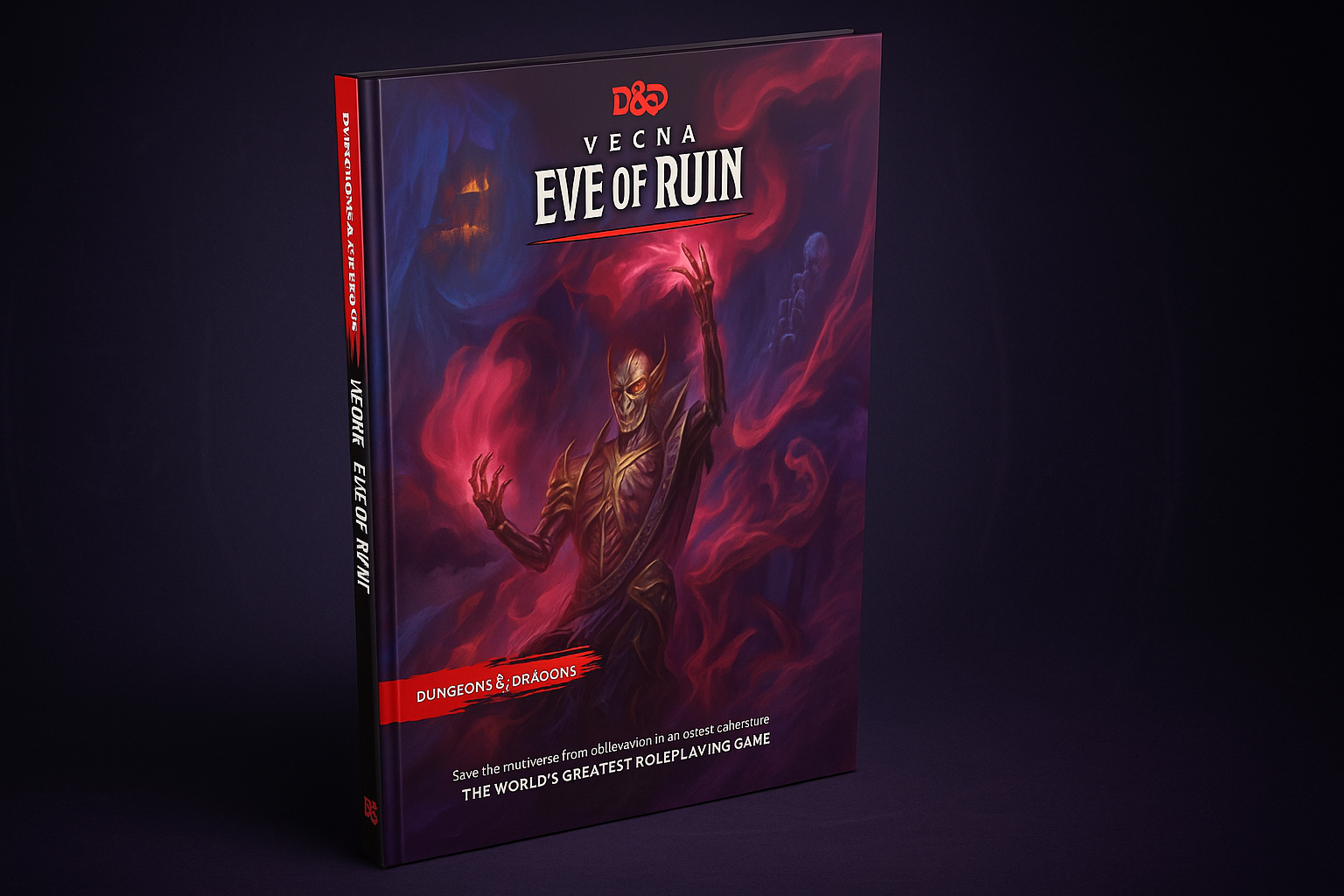
Physically, Eve of Ruin matches modern 5e standards: sturdy hardcover, clean layout, and bold art direction. The monster section, in particular, shines with illustrations that communicate threat level at a glance—handy when you’re staging 18th-level showdowns and need the table to feel the danger before initiative is rolled.
If you play in person, the poster map is a crowd pleaser. In VTTs, the clear area design makes line-of-sight and positioning easy to adjudicate, even when legendary creatures start bending the rules of space.
Who Should Buy Vecna: Eve of Ruin?
- DMs with veteran groups ready for level-10+ play and eager to taste multiple settings without committing to a single-world epic.
- Players who love epic stakes and “save-the-multiverse” storytelling with recognizable NPCs, artifacts, and villains.
- Collectors who want a flagship 50th-anniversary-era adventure that cross-references the core of D&D’s worlds.
Not the best fit if your table thrives on low-level scrappiness or expects a heavily sandboxed campaign where you can ignore plot beats for months. In that case, treat Eve of Ruin as a spine: run its set pieces and villains, but weave them into your homebrew world at your own pace.
Curious whether it fits your group’s style? Skim a few chapters, pick the two planes that most excite your players, and expand those first. Then let the others serve as high-octane interludes between your custom arcs.
Final Thoughts
Vecna: Eve of Ruin aims for mythic spectacle and largely hits that mark—especially once you tailor pacing and decision points to your group. The adventure’s strengths (multiverse sweep, marquee encounters, a juicy bestiary) shine brightest at a table unafraid to punch up tension and customize chapters. If you’ve been waiting for a 5e campaign that lets 17th-level characters feel truly legendary, this is a strong pick—just bring your DM toolkit to keep agency alive and combats challenging.
Ready to run it? Stock the spell components, rally your archmages, and purchase Vecna: Eve of Ruin on Amazon(affiliate link).
As an Amazon Associate I earn from qualifying purchases. Links in this article are affiliate links
