Your cart is currently empty!
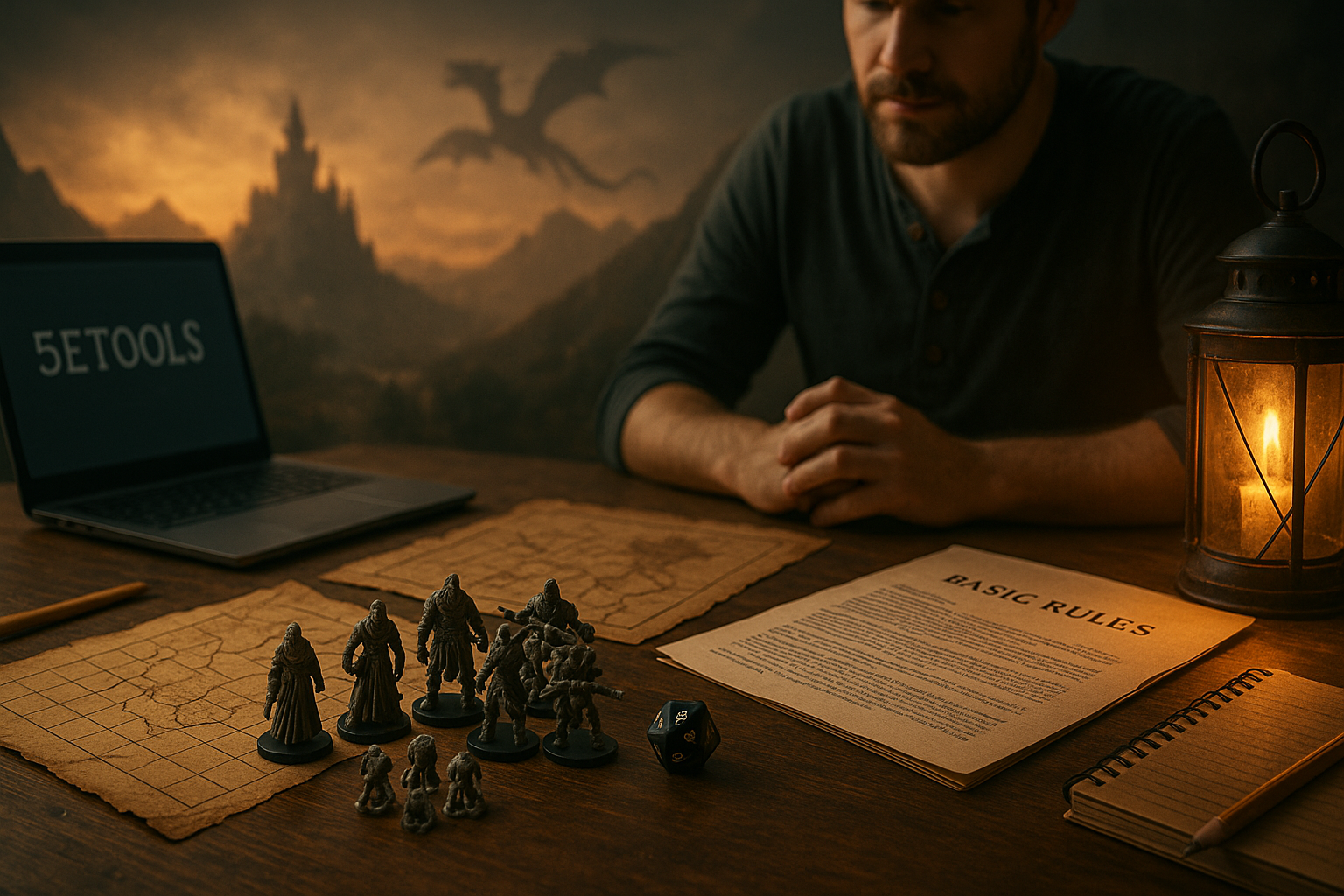
How to Start DMing Without Spending a Fortune
Blog Categories
- All Posts
- Art Books
- Board Games
- Books
- Campaign Modules
- D&D Novels
- Dice
- Miniature Painting
- Official D&D Books
- Paint Sets
- Tabletop Accessories
Shop Categories
Becoming a Dungeon Master is one of the most rewarding roles in tabletop gaming—you’re the storyteller, rules referee, sound-board for player ideas, and architect of hard-won victories. If you’ve browsed game stores or watched a few “DM setup” videos, though, you might think you need a premium library, a closet of terrain, and a suitcase full of minis before you can even start. You don’t. With a few smart choices and the right free tools, you can run unforgettable games on a tight budget.
Below is a practical, step-by-step plan to get you from “I want to DM” to “Roll initiative!”—without draining your coin purse.
1) Start with the official free rules
Before you buy any hardcovers, grab the Basic Rules—they’re free and more than enough to run complete adventures. Wizards of the Coast provides downloadable PDFs, and D&D Beyond hosts the Basic Rules online (including the updated 2024 set). That means you can learn the core mechanics, build characters, and run sessions without spending a dollar on books. media.wizards.comD&D Beyond
Quick tip: Bookmark both—the PDF is great offline; the online version updates and is easy to search. media.wizards.comD&D Beyond
2) Use free digital helpers (carefully)
When you’re DMing on a budget, great search tools and generators save both time and money. A popular option is 5e.tools—a fan-made reference site with searchable monsters, spells, items, and handy generators. The site explicitly notes it’s intended as a digital reference for products you already own; always use it in line with your local laws and the site’s disclaimer. 5e Tools
Pair that with a simple cloud notes app (Google Docs/Notion), and you’ve got a free prep stack that punches way above its weight.
3) Dice on a dime
You only need one polyhedral set to DM, and budget sets regularly run under $15. If your players each bring their own, you’re set. If you want a spare for the table, start with a single set now and upgrade later. (Bonus: the starter kit below includes a random d20, so you may not need to buy dice at all.)
4) Miniatures—the smart first purchase
Minis bring combat to life, but building a collection piece-by-piece gets expensive fast. Instead, start with a curated spread that covers the most common encounters you’ll run early on.
That’s exactly the idea behind the Dungeon Master’s Miniature Heroes & Monsters Kit. It bundles the staples you actually use:
- Five hero minis (a party-ready mix)
- Thirteen monster minis (fodder, elites, and a mini-boss)
- A random d20 to kick things off
- Printed DM aids and bonus digital downloads (via QR)
All minis arrive unassembled and unpainted, which keeps costs low and invites hobby fun if you like building/painting. You get everything you need to run your first handful of dungeons without hunting down individual sculpts or overspending on one-off villains.
5) Battle maps, the budget way
You don’t need a wall of premium map packs to start. Try these tiers:
- Graph paper or a dry-erase grid: sketch rooms and corridors as the party explores.
- Free map releases from creators on DriveThruRPG—search “free map” or look for recurring “Free Map Friday” posts and bundles. You’ll find ready-to-print and VTT-ready maps at no cost. DriveThruRPG+1
If you play online, use a simple virtual tabletop (see next section) and drag-in any image grid to get movement and range for free.
6) Online play? Go free first.
If your group can’t meet in person, stick to platforms with a free tier:
- Owlbear Rodeo offers a free plan (storage-limited) that handles maps, tokens, and fog-of-war basics—perfect for lightweight, low-prep games. Paid tiers mainly add storage and convenience features. Owlbear Rodeo
- Roll20 has a full free plan for core play; Plus/Pro subscriptions unlock extras like more storage and dynamic lighting. wiki.roll20.netRoll20
Between those two, you can run an entire campaign online for zero dollars.
7) Props & handouts (DIY for pennies)
Immersive props don’t need to be expensive. A few sheets of printer paper become “ancient decrees” with a quick tea-stain: brush or soak in strong tea, let dry, and crumple edges for texture. Plenty of step-by-step guides walk through the process in minutes. InstructablesThe Graphics Fairy
Add a wax-seal from a craft store (or a dab of red crayon for the illusion), and your players will swear the writ came straight from a suspicious baron.
8) Prep smarter, not harder
The fast track to great DMing isn’t buying more supplements—it’s focusing your prep where it counts:
- Run a one-shot first. A tight 3–4 hour adventure teaches pacing and encounter balance.
- Build outward from one town. Name a tavern, a smith, a rumor, and one looming problem.
- Lean on generators. Random names, trinkets, and encounters keep the world feeling big without writing novels in advance (5e.tools’ lists help here). 5e Tools
Your players will remember the decisions they made and the consequences that followed—not whether the goblin cave had photorealistic stalactites.
9) Community resources are gold (and free)
Beyond official rules, the TTRPG community churns out an endless stream of free adventures, maps, and advice. Subreddits, Discords, and creator newsletters frequently share one-shots, lairs, and encounter ideas. On marketplace sites, filter for free or “pay-what-you-want” to discover hidden gems and starter content that won’t cost you a copper. (Again, DriveThruRPG’s free map packs are a great starting point.) DriveThruRPG
10) When (and what) to upgrade
Once you’re running consistently and know what your table loves, then consider spending:
- Rules library for inspiration and depth (PHB/DMG/MM).
- Terrain or modular dungeon tiles if your group adores tactical play.
- More minis to match your campaign’s threats (undead, bandits, cultists, etc.).
- VTT upgrades (dynamic lighting, compendium integrations) if your online table wants more automation. Roll20
Upgrades should solve problems you actually have—not ones you imagine you might have someday.
The budget DM starter stack (everything you need to begin)
- Free Basic Rules (PDF + online) for mechanics and character creation. media.wizards.comD&D Beyond
- Fan-reference tools like 5e.tools for quick lookups and generators (use lawfully). 5e Tools
- A curated miniature bundle so your combats look great immediately: the Dungeon Master’s Miniature Heroes & Monsters Kit includes 5 heroes, 13 monsters, a random d20, printed aids, and bonus downloads—all unassembled and unpainted to keep costs down.
- Free or DIY maps, plus a free VTT (Owlbear or Roll20) if you’re remote. Owlbear Rodeowiki.roll20.net
- DIY props (tea-stained paper) for instant immersion. The Graphics Fairy
Final thoughts: Epic adventures, tiny budget
You don’t need a museum-grade setup to be a great DM. Start with the official free rules, leverage free digital references responsibly, grab one smart, all-in-one mini kit, and fill in the rest with DIY maps and props. Your table will remember the tension before the door opens, the gasp when the mimic bites, and the laughter when the bard fails a persuasion check—not how much you spent preparing.
Ready to roll? Build your first encounters, drop minis on the map, hand your players a tea-stained note from a nervous magistrate, and let the adventure unfold. When you’re set to level-up your toolkit, the Dungeon Master’s Miniature Heroes & Monsters Kit is waiting—budget-friendly, table-ready, and designed to make your first campaign sing.
Citations: Basic Rules PDFs and online versions, 5e.tools disclaimer, Owlbear Rodeo free tier, Roll20 free features/subscriptions, DriveThruRPG free map resources, and a quick tea-stain guide. media.wizards.com
